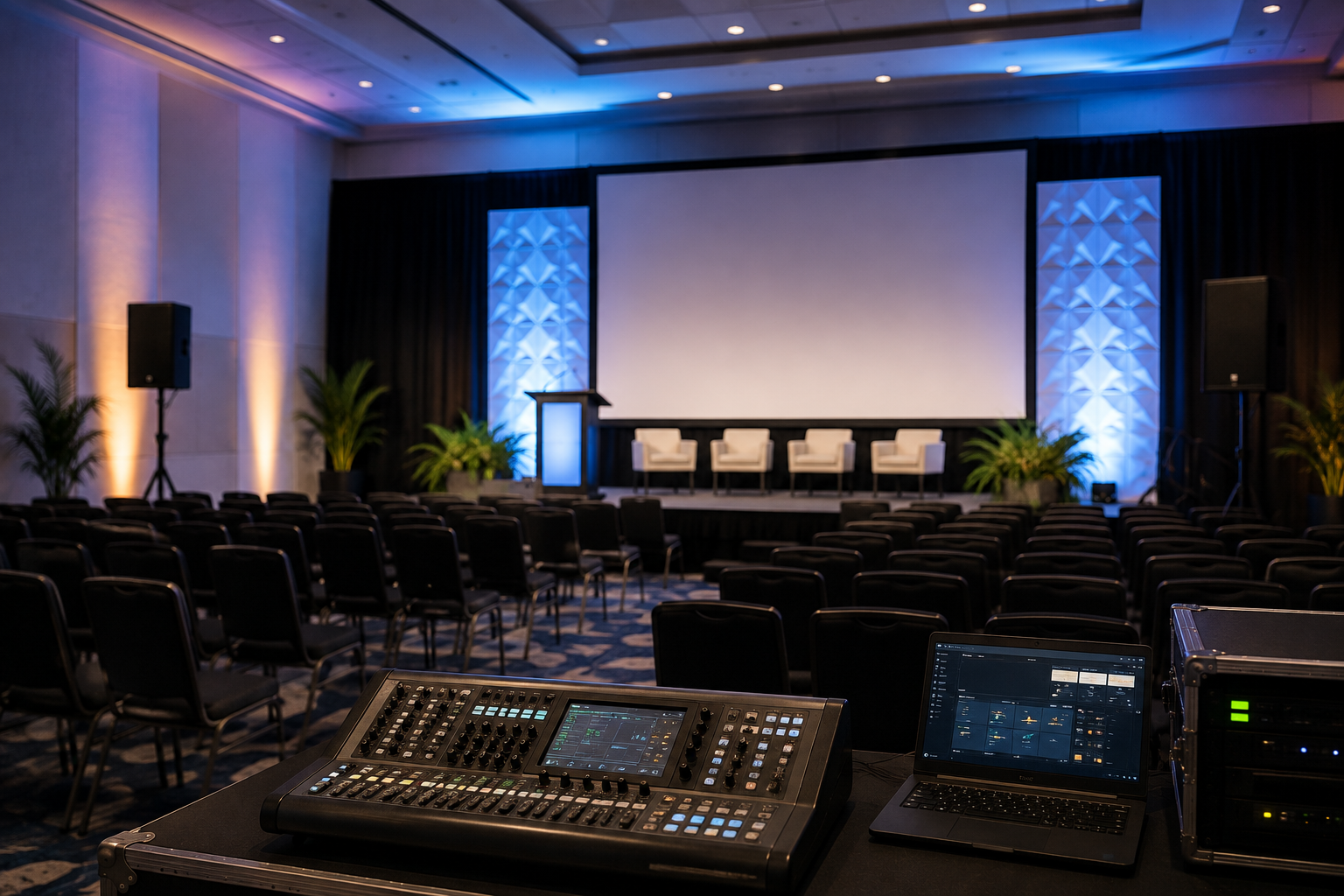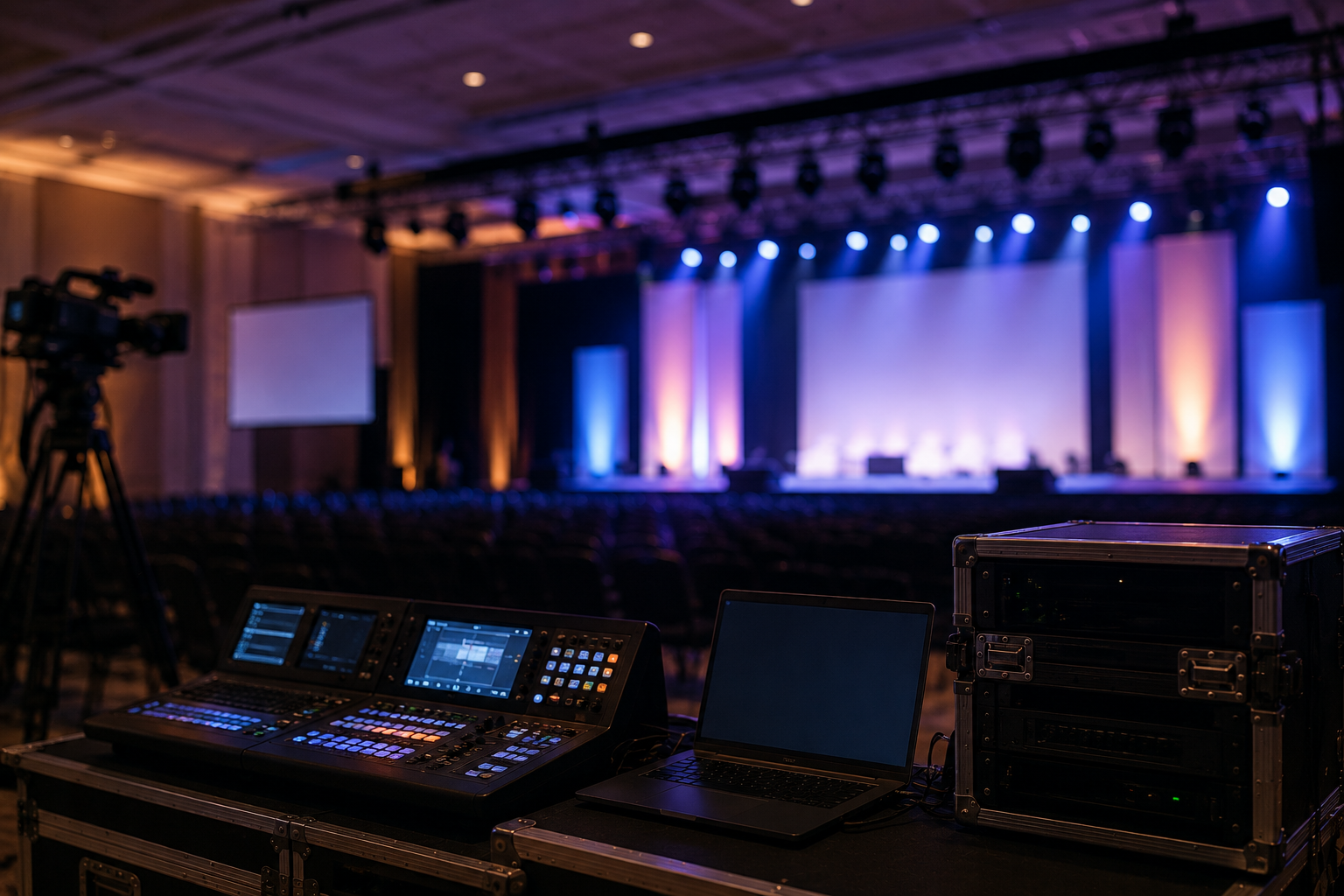
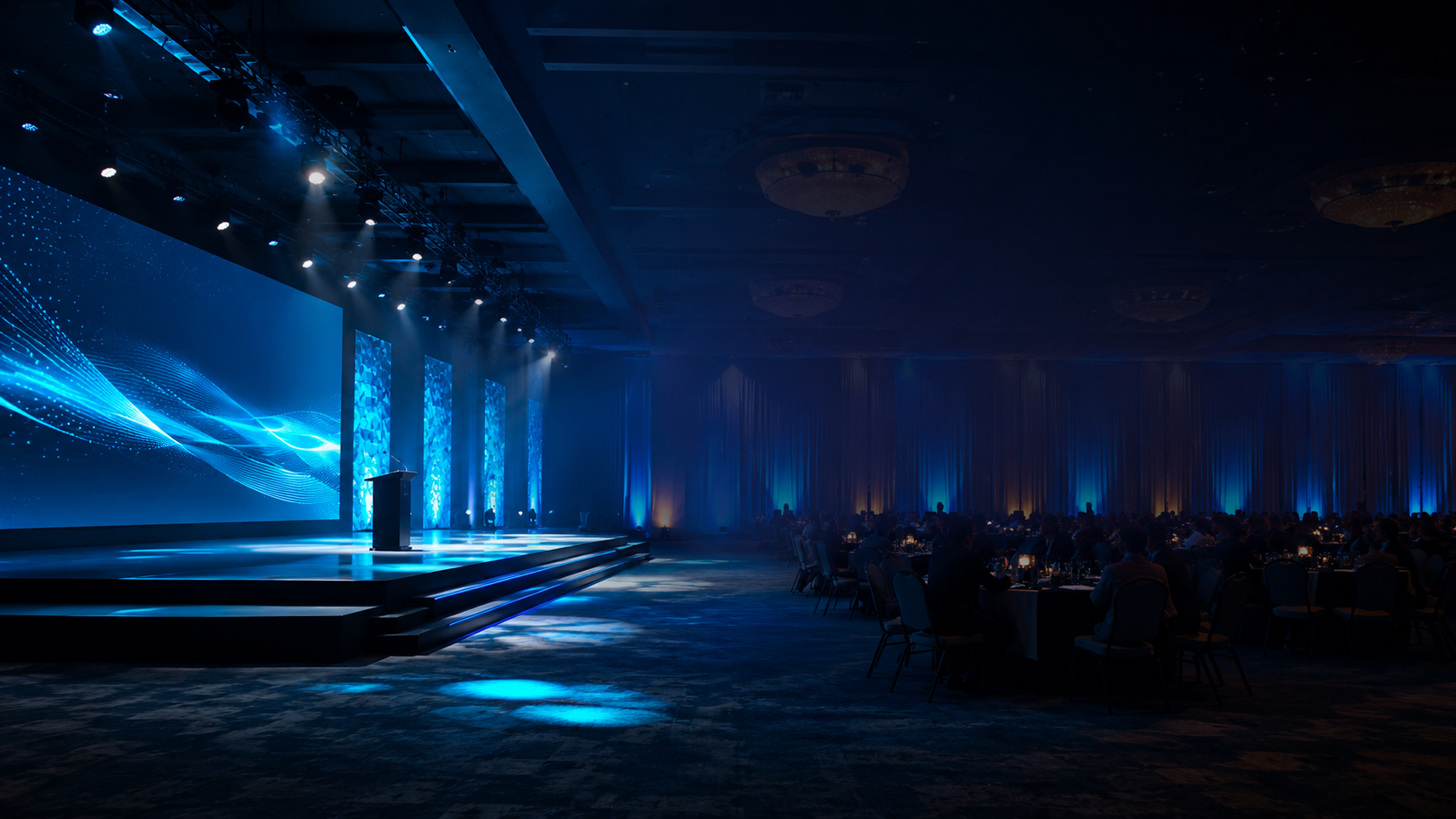
A successful event is rarely defined by one single element. It is the combination of thoughtful planning, creative design, reliable technology, and seamless execution that creates an experience guests remember.
Whether you’re organizing a corporate conference, awards ceremony, trade show, social event, or large-scale production, the smallest production decisions can have a significant impact on the final experience.
At Acuity Event Productions, we believe event production should do more than simply support an event. It should help bring the vision behind the event to life.
Here are five production details that can make a meaningful difference.
1. Start With the Guest Experience
Before choosing screens, lighting fixtures, staging, or sound equipment, start with one simple question:
What should guests experience when they enter the room?
Every technical decision should support the answer.
For a corporate conference, the goal might be clarity, professionalism, and engagement.
For a celebration, the goal may be energy, excitement, and atmosphere.
For a product launch, the focus could be anticipation, impact, and storytelling.
Thinking about the audience first helps create a more intentional production plan.
Consider factors such as:
- What guests see when they first enter the space
- How easily they can see presentations and speakers
- Whether audio is clear throughout the venue
- How lighting changes the atmosphere
- How guests move through the environment
- Where important moments will happen
A well-designed event should feel effortless to the attendee, even when there is significant technology and planning happening behind the scenes.
2. Treat Audio as a Priority
Guests may forgive a small visual imperfection, but poor audio can immediately affect their experience.
If people cannot clearly hear the speaker, presentation, entertainment, or announcement, the message of the event can quickly become lost.
Professional audio planning considers much more than simply placing speakers around a room.
The production team needs to think about the size and shape of the venue, audience location, microphones, speaker positioning, stage monitoring, music playback, presentations, and potential sources of feedback or interference.
For larger events, different areas of the venue may require different audio solutions.
The objective is simple:
Every guest should be able to hear the event clearly without thinking about the technology making it happen.
3. Use Lighting to Create Atmosphere
Lighting is one of the most powerful tools available in event production.
The same venue can feel completely different depending on how it is lit.
Bright, clean lighting can create a professional atmosphere for presentations and conferences, while dynamic lighting can transform a room for entertainment, celebrations, awards, or evening events.
Lighting can also help direct attention.
For example, lighting can emphasize:
- The stage
- Speakers
- Performers
- Branding
- Scenic elements
- Tables and décor
- Architectural features
- Important moments during the program
Lighting doesn’t always have to be dramatic.
Sometimes subtle changes in brightness, color, or positioning are enough to make a space feel significantly more polished.
Great lighting shouldn’t simply illuminate the room—it should help create the atmosphere of the event.
4. Design the Stage Around the Content
A stage is more than a platform for speakers.
It is often the visual center of an event.
That means staging, screens, scenic elements, branding, lighting, and presentation content should work together rather than being treated as separate pieces.
Before designing the stage, consider what will actually happen during the program.
Will there be:
- Keynote presentations?
- Panel discussions?
- Awards?
- Video playback?
- Entertainment?
- Product demonstrations?
- Multiple speakers?
- Audience interaction?
A stage designed around the program makes transitions smoother and helps the audience stay focused on what matters.
Screen placement is particularly important.
Presentation screens should be large enough and positioned correctly so guests throughout the venue can comfortably view the content.
For larger spaces, additional displays or video reinforcement may be needed so attendees farther from the stage still have a strong visual experience.
5. Plan for the Moments Guests Never See
Some of the most important event-production work happens completely behind the scenes.
Guests may never see the technical crew coordinating microphones, managing presentation content, adjusting lighting, monitoring audio, preparing the next speaker, or solving unexpected issues.
And that’s exactly how it should be.
Professional event production involves planning for transitions and potential problems before they happen.
That can include:
- Testing microphones before doors open
- Reviewing presentation files
- Preparing backup equipment
- Checking video playback
- Coordinating with speakers
- Confirming show cues
- Testing internet connectivity
- Creating technical run-of-show documents
- Preparing for last-minute schedule changes
The smoother the technical execution is behind the scenes, the more natural the experience feels to everyone attending the event.
Production Should Support the Story
Technology by itself does not create a memorable event.
What matters is how that technology is used to support the purpose of the gathering.
Audio should help people hear the message.
Lighting should support the atmosphere.
Video should strengthen communication.
Staging should create a focal point.
Scenic design should reinforce the environment and brand.
When these elements work together, event production becomes part of the storytelling rather than simply equipment placed inside a venue.
Creating Your Next Event
Every event has different requirements.
A corporate meeting for 100 attendees requires a very different production approach from a large conference, trade show, awards ceremony, or social celebration.
That’s why successful production starts with understanding the event itself—its audience, objectives, venue, program, and vision.
At Acuity Event Productions, our goal is to help bring those pieces together into a professional and engaging experience from the first guest arrival through the final moment of the event.
Whether you’re beginning with a complete creative vision or simply know what you want your guests to feel, thoughtful production planning can help turn that vision into reality.
Ready to Bring Your Next Event to Life?
Planning an upcoming conference, corporate event, social event, trade show, or special production?
Contact Acuity Event Productions to discuss your event and explore the production solutions that can help make it memorable.