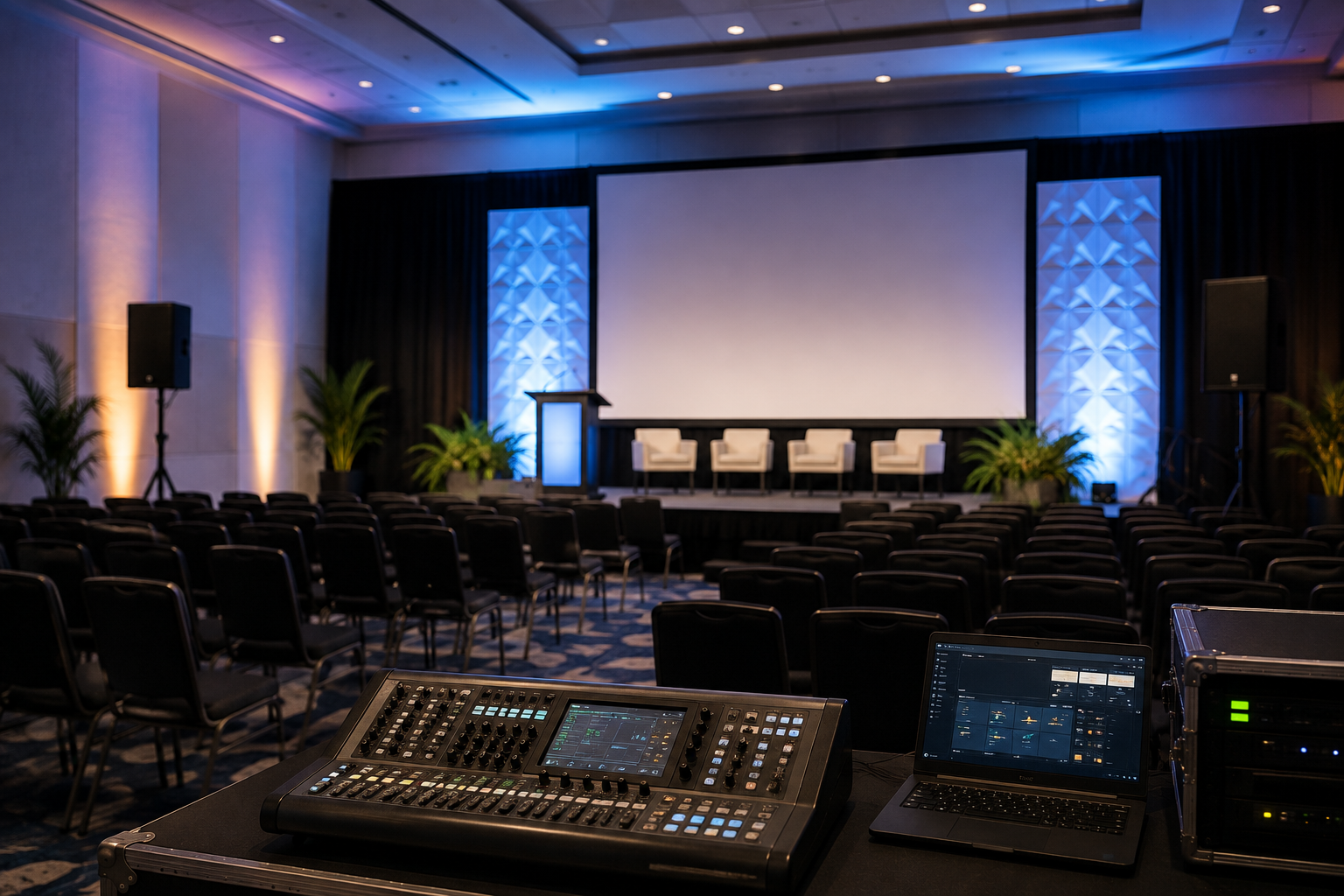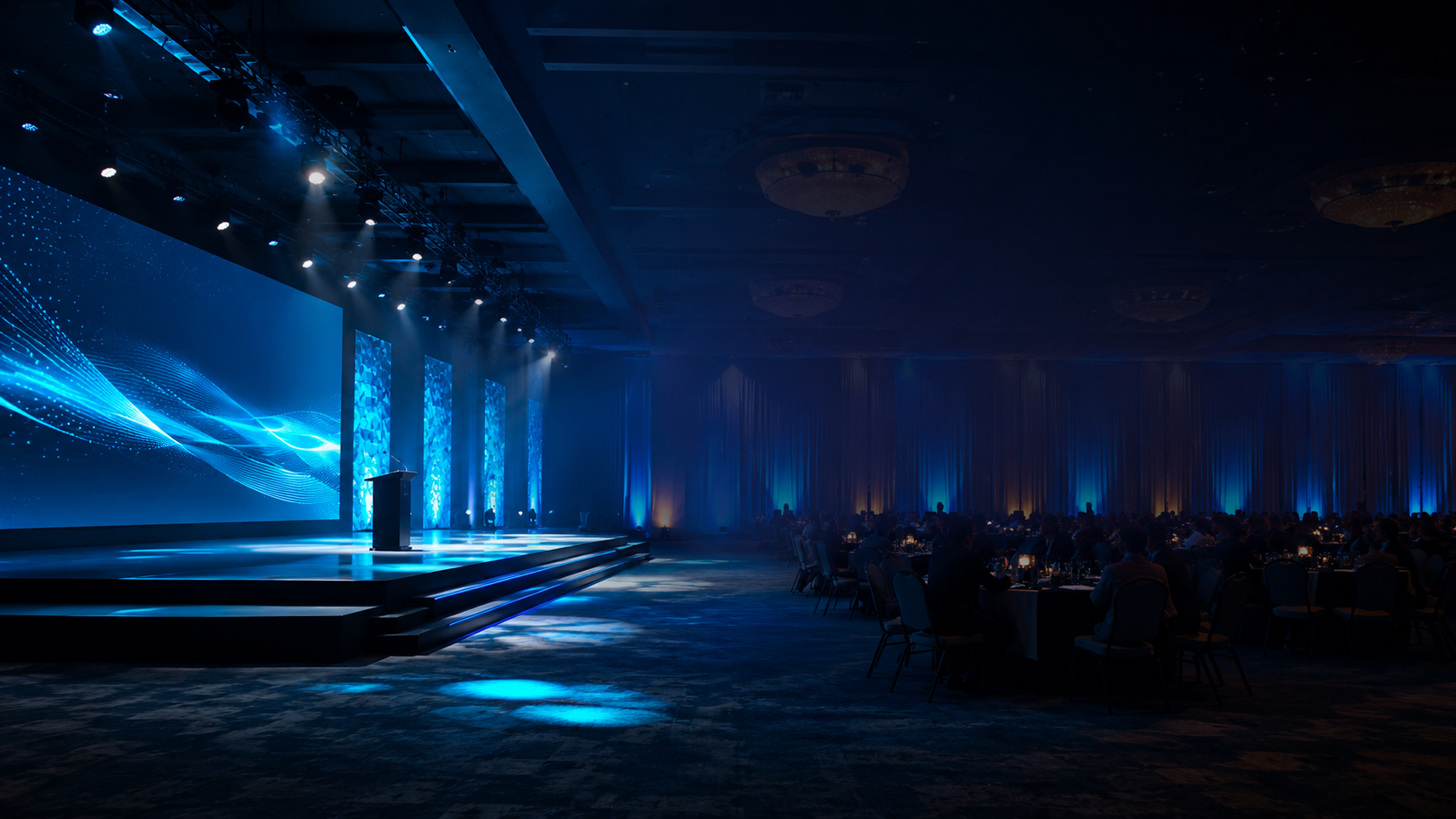
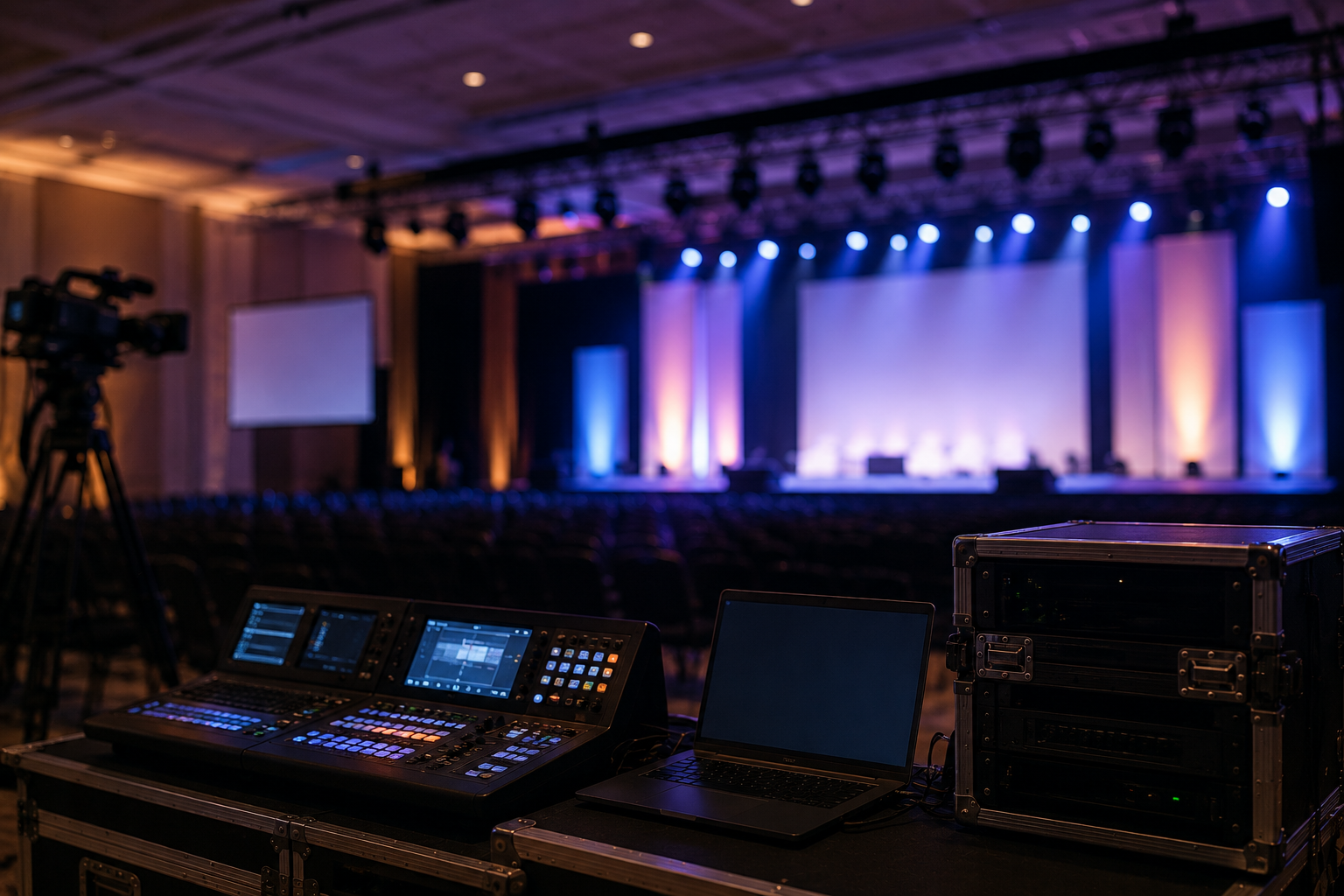
When guests arrive at a professionally produced event, the experience should feel natural.
The microphones work. Presentations appear on screen at the right moment. Lighting changes as speakers enter the stage. Videos play on cue. Music begins exactly when it should.
To the audience, everything simply happens.
Behind the scenes, however, a production team may have spent days, weeks, or even months preparing for those moments.
Successful live event production is built on preparation, communication, technical expertise, and the ability to adapt when plans change.
1. It Starts Long Before Event Day
Production planning begins well before equipment arrives at the venue.
The first step is understanding the event itself.
What is the purpose of the event? Who will be attending? What needs to happen on stage? What should guests see and hear? What experience should the event create?
The production team may need to evaluate:
- Audience size
- Venue layout
- Stage requirements
- Audio requirements
- Video and presentation needs
- Lighting design
- Power availability
- Rigging opportunities
- Internet connectivity
- Speaker requirements
- Entertainment
- Event schedule
These conversations help transform an event concept into a practical production plan.
2. The Venue Plays a Major Role
Every venue presents different opportunities and challenges.
A ballroom, convention center, outdoor space, theater, corporate office, and temporary event structure all require different production approaches.
Before event day, the production team may review floor plans or conduct a site visit.
Important questions include:
- Where will the stage be located?
- Where will guests sit?
- Where can speakers and lighting equipment be positioned?
- Is rigging available?
- Where is electrical power located?
- How will equipment enter the building?
- Where will the production team operate?
- Are there venue restrictions or scheduling limitations?
Identifying these details early can prevent surprises during setup.
3. Equipment Is Selected for the Event
There is no single equipment package that works for every event.
The technology should be selected according to the venue, audience, program, and creative requirements.
A production may require a combination of:
- Professional audio systems
- Wireless microphones
- Digital mixing consoles
- LED video displays
- Projection systems
- Cameras
- Video switching equipment
- Presentation computers
- Stage lighting
- Intelligent lighting fixtures
- Scenic elements
- Staging
- Rigging equipment
The objective isn’t to use the largest amount of equipment possible.
It’s to select the right tools to deliver the experience reliably.
4. Setup Turns the Plan Into Reality
Event setup is when months of planning begin taking physical form.
Equipment arrives at the venue and the production environment is built.
Depending on the event, this may involve installing staging, assembling LED displays, positioning speakers, hanging lighting fixtures, running cables, configuring control systems, testing presentations, and preparing backstage areas.
Different departments work together throughout this process.
Audio, lighting, video, staging, and event teams all need to coordinate their work so one part of the setup doesn’t interfere with another.
Careful coordination is especially important when setup time is limited.
5. Rehearsals Are Essential
A rehearsal isn’t simply an opportunity for speakers to practice their presentations.
It is also an important technical test.
During rehearsal, the production team can confirm:
- Microphone levels
- Presentation content
- Video playback
- Lighting cues
- Speaker entrances
- Walk-on music
- Camera positions
- Stage transitions
- Timing
- Communication between departments
This is also the opportunity to identify potential problems while there is still time to solve them.
The more complex the event, the more valuable a thorough rehearsal becomes.
6. The Show Is Managed Cue by Cue
Once guests arrive, the focus shifts from setup to execution.
The production team follows the event’s run of show and coordinates each technical moment.
A typical sequence might include:
Stand by lighting.
Stand by audio.
Stand by video.
Speaker ready backstage.
Music ready.
Then:
Go.
Those few seconds may involve several people executing different technical responsibilities simultaneously.
Clear communication helps ensure that every department knows what is happening and what comes next.
7. Backup Plans Matter
Live events don’t have an undo button.
If something unexpected happens, the production team needs to respond quickly.
That is why redundancy and contingency planning are important parts of professional event production.
Depending on the event, backup planning may include:
- Spare microphones
- Backup presentation computers
- Duplicate media files
- Additional cables and adapters
- Alternative signal paths
- Backup power considerations
- Replacement equipment
- Contingency plans for schedule changes
The audience may never know a backup system was used—and that’s the point.
8. Communication Keeps Everything Connected
Technology is only one part of successful production.
Communication is equally important.
Event planners, venue staff, producers, speakers, entertainers, technical departments, and other vendors may all be working toward the same event.
Clear communication helps everyone understand responsibilities, timing, changes, and expectations.
A technically excellent production can still become difficult if teams aren’t communicating effectively.
The strongest productions combine reliable technology with organized collaboration.
The Best Production Often Feels Invisible
Guests shouldn’t need to think about microphones, video processors, lighting consoles, signal distribution, or backstage communication.
They should be focused on the event.
When production is executed well, technology supports the experience without becoming a distraction.
The audience sees the speaker.
They hear the message.
They experience the atmosphere.
And they remember the event.
That’s what seamless production is designed to achieve.
Bringing the Pieces Together
Every successful live event is the result of many individual details working together.
Planning establishes the foundation.
Technology provides the tools.
The production team brings the plan to life.
And communication keeps everything moving in the same direction.
At Acuity Event Productions, our approach is centered on bringing those elements together to create reliable, polished, and memorable event experiences.
Planning an Upcoming Event?
From early production planning through show day, having the right technical team involved can make the entire process more effective.
Contact Acuity Event Productions to discuss your upcoming event and the production support needed to bring it to life.